SEO vs. GEO: The Difference Simply Explained
SEO gets you into the search results, GEO into the AI answer. What sets SEO and GEO apart, what they share, and when you need both.
 Richard Roth SEO & GEO Freelancer
 August 3, 2026
3 min read
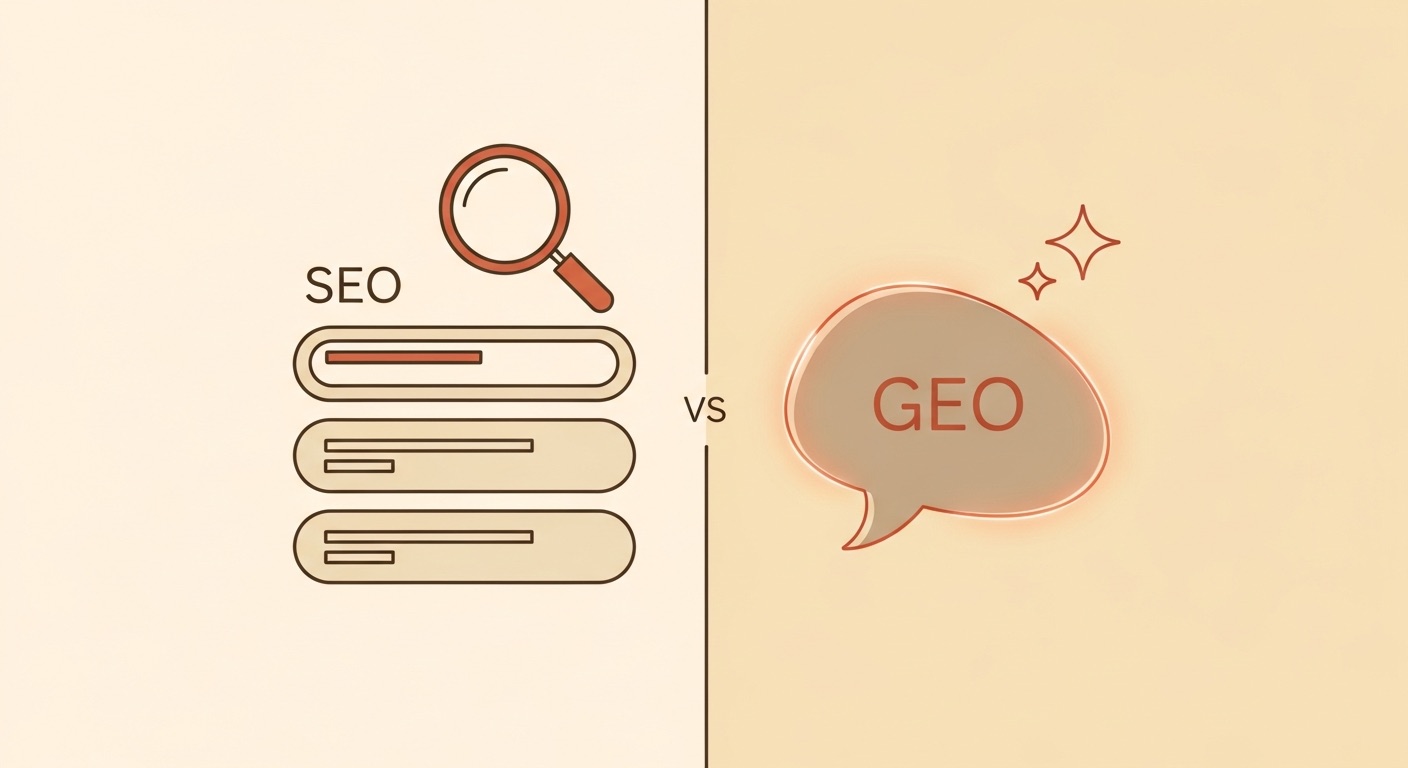
SEO and GEO share the same goal, more visibility, but in different places. SEO (Search Engine Optimization) makes your page show up in Google’s search results. GEO (Generative Engine Optimization) makes your brand get recommended in the answers of AI systems like ChatGPT or Perplexity.
The two are more closely linked than they first appear. This article shows the difference, the similarities, and when to focus on which lever.
What is the difference between SEO and GEO?
The core is simple: SEO gets you into the results list, GEO gets you into the answer. With SEO you compete for one of the top spots for a keyword. With GEO you compete to have the AI pick you as a source when it answers a question.
That also changes what matters. For GEO, clear facts, a strong brand and entity presence, and trustworthy mentions elsewhere count more than the single keyword.
On the SEO side, a lot depends on how you earn your money. A local business fights for the map section, a shop for category pages and clean product data, a B2B provider for a handful of queries with a high order value. I have described those differences separately: Local SEO, E-Commerce SEO and B2B SEO.
SEO and GEO compared directly
| Criterion | SEO | GEO |
|---|---|---|
| Goal | Spot in the search result list | Mention in the AI answer |
| Channel | Google, Bing | ChatGPT, Perplexity, Google AI |
| Measurement | Rankings, clicks, impressions | Mentions in AI answers |
| Main lever | Keywords, content, technology | Entities, facts, trust |
| User action | Click on a result | Answer directly in the AI |
What do SEO and GEO have in common?
More than the comparison suggests. A technically clean, fast-loading website helps in both worlds. So do clear, well-structured content. And trust signals like mentions on other sites strengthen both your ranking and your chance of being cited by an AI.
Do I need SEO or GEO?
In most cases, both. As long as a large share of searches still runs through Google, SEO stays the foundation. At the same time, the share of searches that end in an AI answer, without anyone clicking, is growing. GEO makes sure you show up there too.
Where you start depends on how your customers search today and how solid your basis already is. That is exactly where SEO and GEO consulting begins, before anything gets implemented.
For agencies, that means: you can offer both services without building a team for it yourself. Learn more on White Label SEO and White Label GEO.
Does GEO replace classic SEO?
Is GEO just a new buzzword?
How do I get started with GEO?
Do AI answers name you?
I check which questions ChatGPT, Perplexity and Google AI name you for today, and who they name instead.
Request GEOYou might also like

GEO Checklist: Become Visible in AI Answers in 8 Steps
A practical GEO checklist: in 8 steps, make your brand visible as a source in ChatGPT, Perplexity and Google AI Overviews. Ready to work through.
How to Get Recommended by ChatGPT: 6 Ways to More AI Visibility
How your brand gets recommended as a source in ChatGPT and Perplexity: clear facts, strong entities, trust signals and clean technology.

What Does a GEO Freelancer Cost? Prices and Models
What a GEO freelancer costs depends on the model: audit, project or ongoing support. Here is how to budget for GEO realistically, without agency overhead.