ChatGPT Ads vs. Google Ads: What Is the Difference?
ChatGPT Ads and Google Ads reach users in different moments. A comparison of placement, intent, cost and when each channel pays off.
 Richard Roth SEO & GEO Freelancer
 September 5, 2026
4 min read
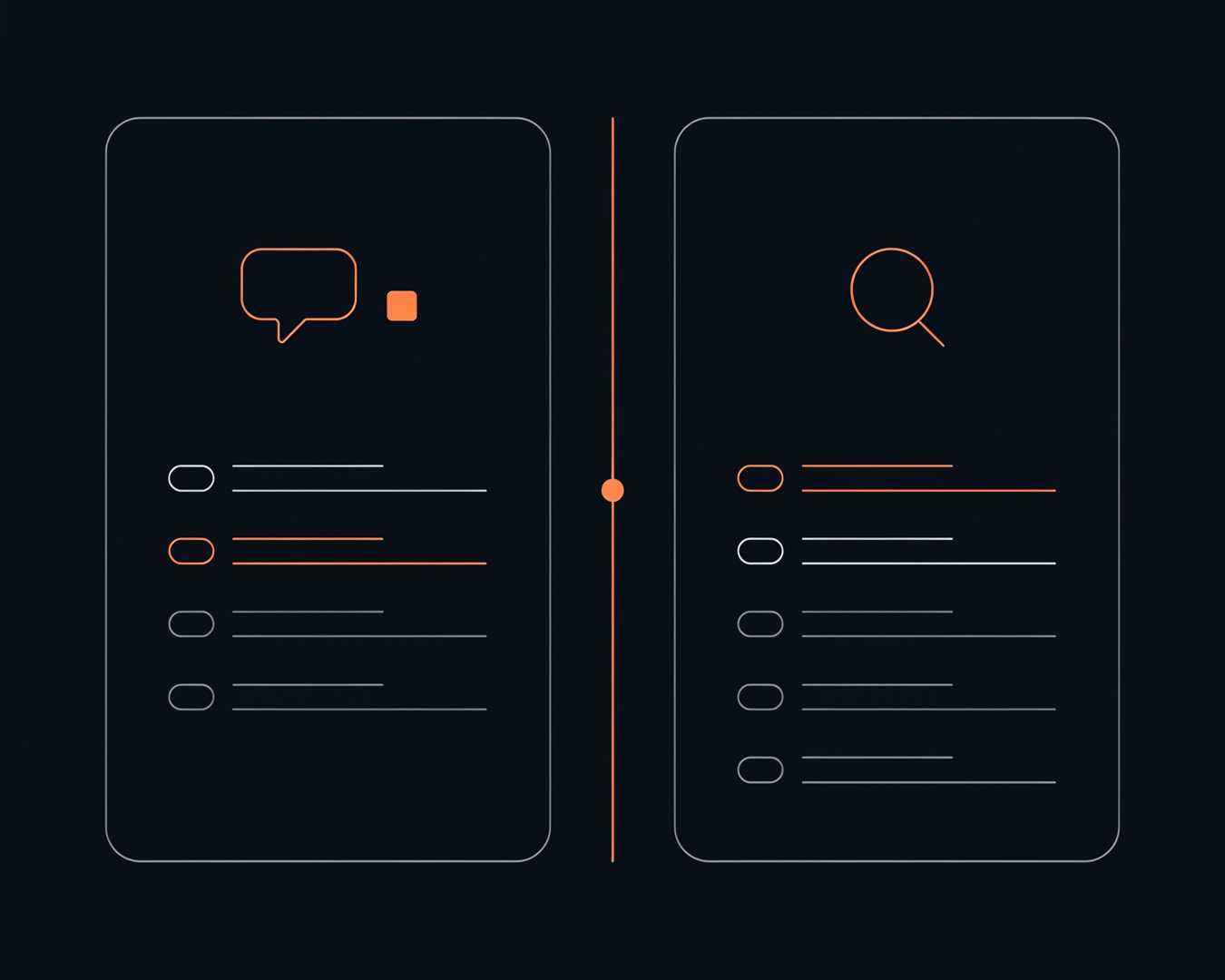
The most important difference between ChatGPT Ads and Google Ads is the moment in which they reach the user. Google Ads appear in classic search, where people see a list of links and click themselves. ChatGPT Ads appear around a finished AI answer, often on very specific buying and advisory questions. The two channels do not compete, they complement each other, because they cover different phases of the decision.
Where do the ads appear in each case?
Google Ads appear above and next to the organic search results. The user sees several options at once and decides what to click. ChatGPT Ads, by contrast, appear in a conversational situation: the user has asked a question and receives a written answer. The ad connects to that context, instead of standing as one of many options in a list.
How does the search intent differ?
In Google search, people often type just a few words. In ChatGPT they describe their concern in more detail, ask follow-up questions and provide context. That makes the intent behind a query in ChatGPT often clearer and further along. Whoever understands these fully phrased questions can connect more precisely with their message than with a short search term.
Which channel is cheaper?
Currently, ChatGPT Ads are cheaper in many areas because competition for placements is still low. Google Ads, by contrast, are often expensive in established industries, where many advertisers have been bidding for years. However, this cost advantage of ChatGPT Ads is a time window. The more businesses discover the channel, the more the prices converge. For the US market, where self-serve data is already available, ChatGPT Ads click prices (CPC) are reported at around $3 to $5, and $8 to $18 in highly competitive industries like software or finance. There is more on this in the article What do ChatGPT Ads cost?.
How does measurement differ?
With Google Ads, measurement has been established for years: clicks, conversions and costs can be analyzed in detail. As a young channel, ChatGPT Ads are still building this out, but the basic logic stays the same: you measure which campaign brings which inquiries or sales and manage accordingly. What matters is setting up clean tracking from the start, so you can compare both channels by the same standards instead of apples and oranges.
Which industries suit which channel?
Google Ads are strong when there are already established search terms with clear volume for your offer, for example with well-known products and services. ChatGPT Ads play to their strength with offers that need explanation, where people have many questions and seek advice before deciding. Software, services and complex products benefit especially here. In practice, for most businesses it pays to test both channels to see where their own audience responds better.
When does each channel pay off?
Google Ads pay off when you want to capture known, plannable demand and the established search terms for your offer already have volume. ChatGPT Ads pay off when your audience increasingly researches with AI and asks its questions in detail. In practice, the strongest answer is rarely an either-or, but the combination. How I set up both channels together is on the ChatGPT Ads page.
Should I replace Google Ads with ChatGPT Ads?
Are ChatGPT Ads easier to use than Google Ads?
Can I reach the same audience with both channels?
Want to get ChatGPT Ads running?
I set up your ad account, build the campaigns and manage them continuously. Be early in the new AI ad channel.
Request ChatGPT AdsYou might also like
AI Advertising in 2026: An Overview of Ads in AI Systems
AI advertising means paid placements in AI systems like ChatGPT. An overview of the channels, the EU rollout and why an early start pays off now.
What Do ChatGPT Ads Cost? Prices, Budget and Cost Logic
What ChatGPT Ads cost depends on budget, industry and competition. Here is how the cost logic works and what budget makes sense to start with.
GEO vs. ChatGPT Ads: Do I Have to Pay for AI Visibility?
GEO brings organic visibility in AI answers, ChatGPT Ads bring paid visibility. A comparison of when each pays off and why the combination works best.