E-Commerce SEO Revenue from search, not only from your ad budget

In most shops the bulk of organic revenue comes from category pages nobody maintains. That is exactly where I unlock the potential you have already paid for.

Sichtbar werden in: Google, ChatGPT, Perplexity, Bing, Gemini, Claude
Get your shop reviewed
  • Antwort in 24 Stunden
  • Unverbindliches Erstgespräch
Shop-Struktur Kategorien, die ranken, Produkte, die verkaufen

Working with Richard has been a pleasure and shows results fast: our organic traffic rose about 7% after roughly two weeks and the new product pages convert better with an 11% uplift.

Oliver N.

Delivery More visibility per category, not only on the homepage
Erneuerbare Energien aktuell Masori Bewerbung Schreiber Kopi King Entity X Blue World Studio Skillisch Marketing Metallbau Schäfer Artident Sichtbarer werden Uprank Tactics
Richard Roth, SEO und GEO Freelancer

Your contact for shop visibility

E-commerce SEO works differently from SEO for a company website. A shop has hundreds to tens of thousands of URLs, most of which should never rank, and a few hundred that really matter. The craft lies in making those few strong and clearing the rest out of the way.

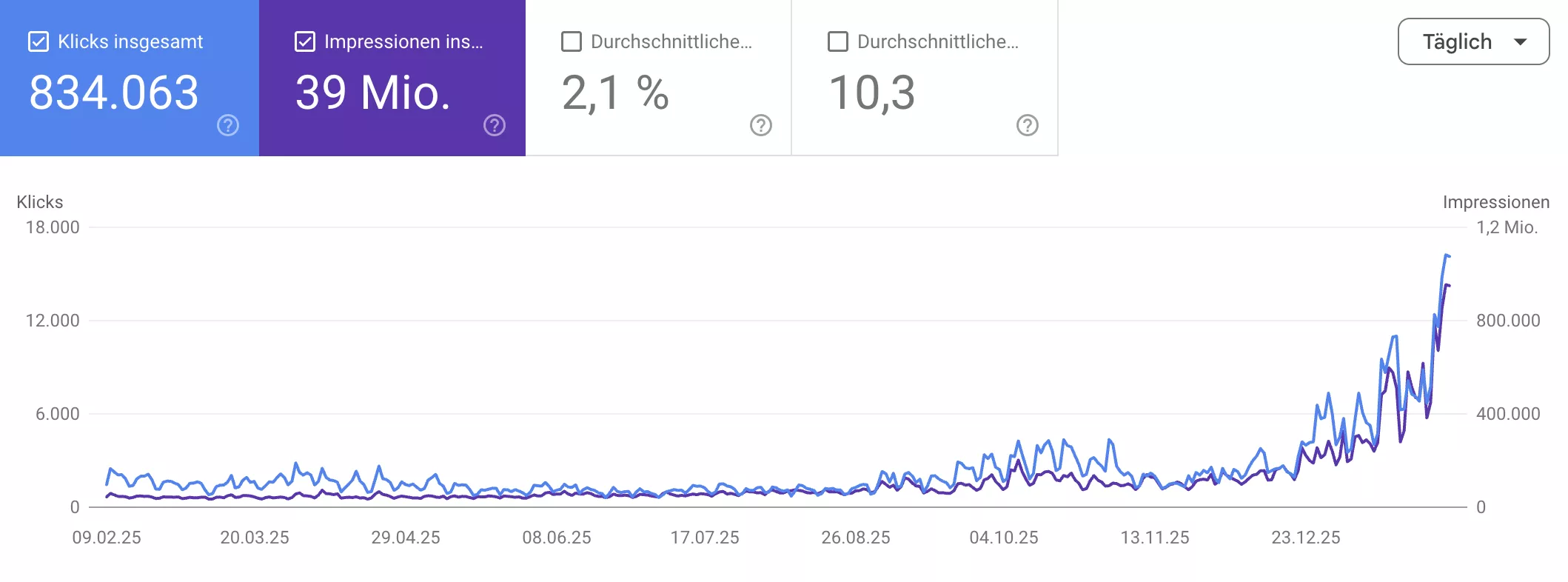
I have looked after shops from niche products to marketplaces with millions of impressions, including Shopify, Shopware and WooCommerce. You get someone who knows where the typical traps sit in which system. How the collaboration runs is described on SEO Freelancer.
0+
Projekte
0+
Jahre Erfahrung
0%
Job Success

Anfrage

Erzähl mir von deinem Projekt

Schreib mir kurz, worum es geht. Ich melde mich innerhalb von 24 Stunden mit einer ehrlichen Einschätzung, ob und wie ich dir helfen kann.

  • Antwort innerhalb von 24 Stunden
  • Ehrliche Einschätzung statt Verkaufsgespräch
  • Erster Blick auf deine Ausgangslage

5,0 von 5 aus 30+ Bewertungen

I usually respond within 24 hours.

Lieber direkt sprechen? 30 Minuten Termin wählen

Ablauf

How your e-commerce SEO project runs

Clean up first, then build.

  1. 01

    Technical audit

    I look at which URLs are indexed and which of them are ballast: filters, sorting, variants, pagination. In shops that is almost always the first lever.

  2. 02

    Potential analysis

    Which categories have demand you are not capturing today, and which products could rank if their page were more than a manufacturer description?

  3. 03

    Structure & categories

    The category architecture gets built to follow search demand. On top come contents that turn a product list into a page that can rank.

  4. 04

    Product pages & data

    Product copy, attributes and structured data get set up so Google and AI systems understand what the product does and who it is for.

  5. 05

    Measure & build

    We track visibility and revenue per category, not just the total, and add where the work pays off.

Which shops I work for

The levers differ a lot depending on how large your range is.

Small ranges

Few products, but ones that need explaining. Here technology does not win, content does: whoever answers the questions around the product best gets the purchases.

  • Product pages with real depth
  • Guide content that leads to purchase
  • Brand as the answer to the buying question

Growing shops

The range grows faster than the structure. Typical signs are categories nobody planned and products taking rankings from each other.

  • Category architecture reordered
  • Internal competition resolved
  • Structure that grows with the range

Large catalogues

From a few thousand products on, technology decides. Filter URLs, variants and pagination create volume that eats crawl budget and returns nothing.

  • Indexing steered deliberately
  • Filter and variant URLs under control
  • Crawl budget directed at what matters

How I support you

Pick an area to see what it actually involves.

In almost every shop categories are the strongest landing pages and at the same time the least maintained. I give them a clear focus, their own content and a structure that follows search demand rather than the inventory system.

  • One clear intent per category
  • Content instead of a plain product list
  • Architecture follows demand

What clients say about working together

5,0 aus 32 Bewertungen
Through the A/B tests and optimizations we increased our conversion rate by 23%. The collaboration was structured and results-driven.
Andreas H.
Richard supported us strongly with SEO and A/B testing. For some of our products we achieved a 13% conversion uplift while making performance more stable.
Daniel H.
Great work. Richard supported us with various SEO perspectives, including AI Search. I can recommend him without reservation.
David R.

Häufige Fragen

Frequently asked questions about e-commerce SEO

What is different about e-commerce SEO?

Above all the volume. Through filters, sorting and variants a shop creates a very large number of URLs, most of which have no search value. A large part of the work is therefore keeping ballast out of the index and making the few important pages strong.

Are category or product pages more important?

In most shops category pages bring the larger share of organic revenue, because the queries are more general and the volume higher. Product pages mainly pay off for branded products with their own demand and for items that need explaining.

Is it enough to use manufacturer copy?

No. The same description sits on many shops at once, so there is no reason to show your page in particular. Own content with use cases, properties and real buying questions is one of the strongest levers on product pages.

Which shop systems do you work with?

Mainly Shopify, Shopware and WooCommerce. The SEO principles are the same everywhere, but each system has its own quirks around URL structures, variants and performance. I know those traps and plan for them from the start.

How long until e-commerce SEO pays off?

Technical clean-up often works within weeks, because Google suddenly crawls the shop more efficiently. For noticeable revenue growth through categories you should plan six to twelve months, depending on range and competition.

Is SEO worth it if I mainly sell through ads?

Especially then. Organic revenue reduces your dependence on ad budget and improves contribution margin per order. In many shops the categories currently running ads deliver considerably more organically once they are set up properly. The same work on product data is also what lets AI systems recommend your products at all, see E-Commerce GEO.

Aktuell Kapazität für neue Projekte

Where does your shop stand organically?

Tell me briefly which shop you run and where it is stuck. I will get back to you within 24 hours with an honest assessment.

Get your shop reviewed