GEO Checklist: Become Visible in AI Answers in 8 Steps
A practical GEO checklist: in 8 steps, make your brand visible as a source in ChatGPT, Perplexity and Google AI Overviews. Ready to work through.
 Richard Roth SEO & GEO Freelancer
 August 25, 2026
3 min read

This GEO checklist walks you through the most important levers in eight steps, so your brand shows up as a source in the AI answers of ChatGPT, Perplexity and Google AI Overviews. You can work through it top to bottom, because the order follows the logic from status check to ongoing monitoring.
Step 1: Measure your status with real prompts
Before you optimize anything, check the current state. Ask ChatGPT, Perplexity and Google real questions from your topic area and document whether and how your brand appears, and which competitors are named. That is your baseline.
Step 2: Sharpen your own entity
AI systems think in entities, not keywords. Make it clear who you are, what you offer and for whom. Consistent information on your website, in directories and on profiles like LinkedIn helps the systems place your brand unambiguously.
Where a model pulls that information from differs by business model. For local businesses, Google Maps is very often the first source, for shops it is the product data. More detail on Local GEO and E-Commerce GEO.
Step 3: Make content citable
Write so an AI can easily take over individual statements. That means clear facts, concrete answers to concrete questions, meaningful subheadings and short, unambiguous paragraphs. Vague marketing language rarely gets cited.
Step 4: Cover questions and FAQs
AI answers come from questions. Explicitly cover the real questions of your audience, for example through FAQ sections and guide content. That increases the chance your page is used as a source for exactly that question.
Step 5: Strengthen E-E-A-T and trust signals
Experience, expertise, authority and trustworthiness matter to AI systems. Name real authors with a profile, back up statements with sources and ensure trustworthy mentions of your brand on other, topically relevant sites.
Step 6: Technical foundation and structured data
Without clean technology, even the best content does little. Ensure good crawlability, a clear structure and structured data (Schema.org) so systems understand your content correctly. An llms.txt can additionally signal which content is relevant.
Step 7: Build off-site presence
Your visibility does not depend on your own site alone. Mentions, entries and content on other trustworthy sites solidify your entity and give AI systems additional, independent evidence of your authority.
Step 8: Monitoring and repetition
GEO is not a one-time project. Repeat the prompt tests from step 1 regularly, document changes and adjust your measures. That way you see what works and keep pace with the fast changes in AI search.
If you would rather not implement these steps yourself, the GEO Freelancer page explains how I handle this for brands. What GEO is in the first place is explained in the article What is GEO?.
How long does GEO take to work?
Do I need special tools for GEO?
Can the checklist be done without SEO knowledge?
Do AI answers name you?
I check which questions ChatGPT, Perplexity and Google AI name you for today, and who they name instead.
Request GEOYou might also like
How to Get Recommended by ChatGPT: 6 Ways to More AI Visibility
How your brand gets recommended as a source in ChatGPT and Perplexity: clear facts, strong entities, trust signals and clean technology.
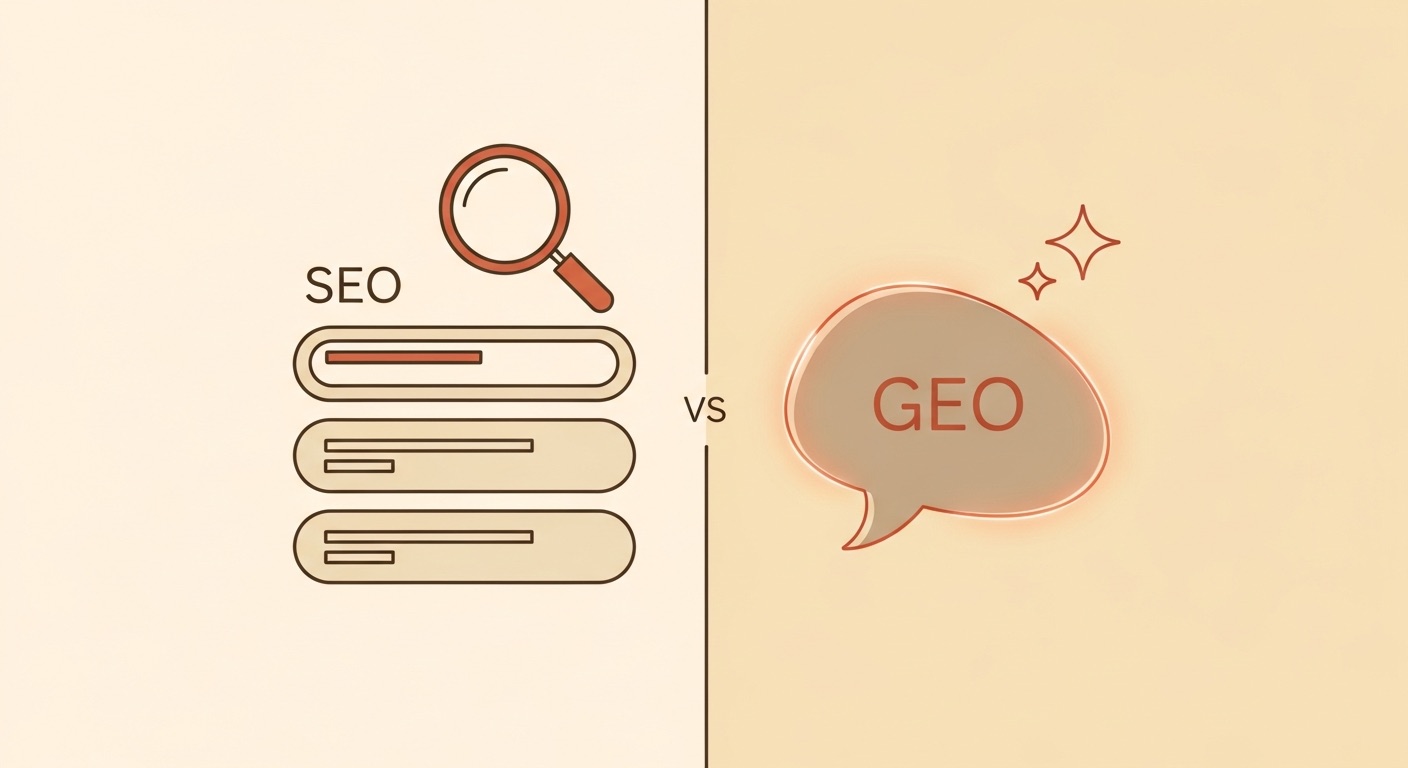
SEO vs. GEO: The Difference Simply Explained
SEO gets you into the search results, GEO into the AI answer. What sets SEO and GEO apart, what they share, and when you need both.

What Does a GEO Freelancer Cost? Prices and Models
What a GEO freelancer costs depends on the model: audit, project or ongoing support. Here is how to budget for GEO realistically, without agency overhead.