What Is GEO (Generative Engine Optimization)? Simply Explained
GEO stands for Generative Engine Optimization: optimizing to be recommended in AI answers from ChatGPT, Perplexity and Google AI. Here is how it works.
 Richard Roth SEO & GEO Freelancer
 August 25, 2026
4 min read

GEO stands for Generative Engine Optimization and describes optimizing content to be cited as a source and recommended as a solution inside the answers of generative AI systems like ChatGPT, Perplexity and Google AI Overviews. Unlike classic SEO, GEO does not aim for a spot in the link list, but for a spot in the generated answer itself.
What does GEO stand for?
GEO is short for Generative Engine Optimization. The term covers everything that helps a brand or website show up in the answers of generative AI systems. Sometimes the same concept is called AI SEO or LLMO (Large Language Model Optimization). The goal is always the same: not just to be found on Google, but to be recommended inside the AI answer.
What is the difference between GEO and SEO?
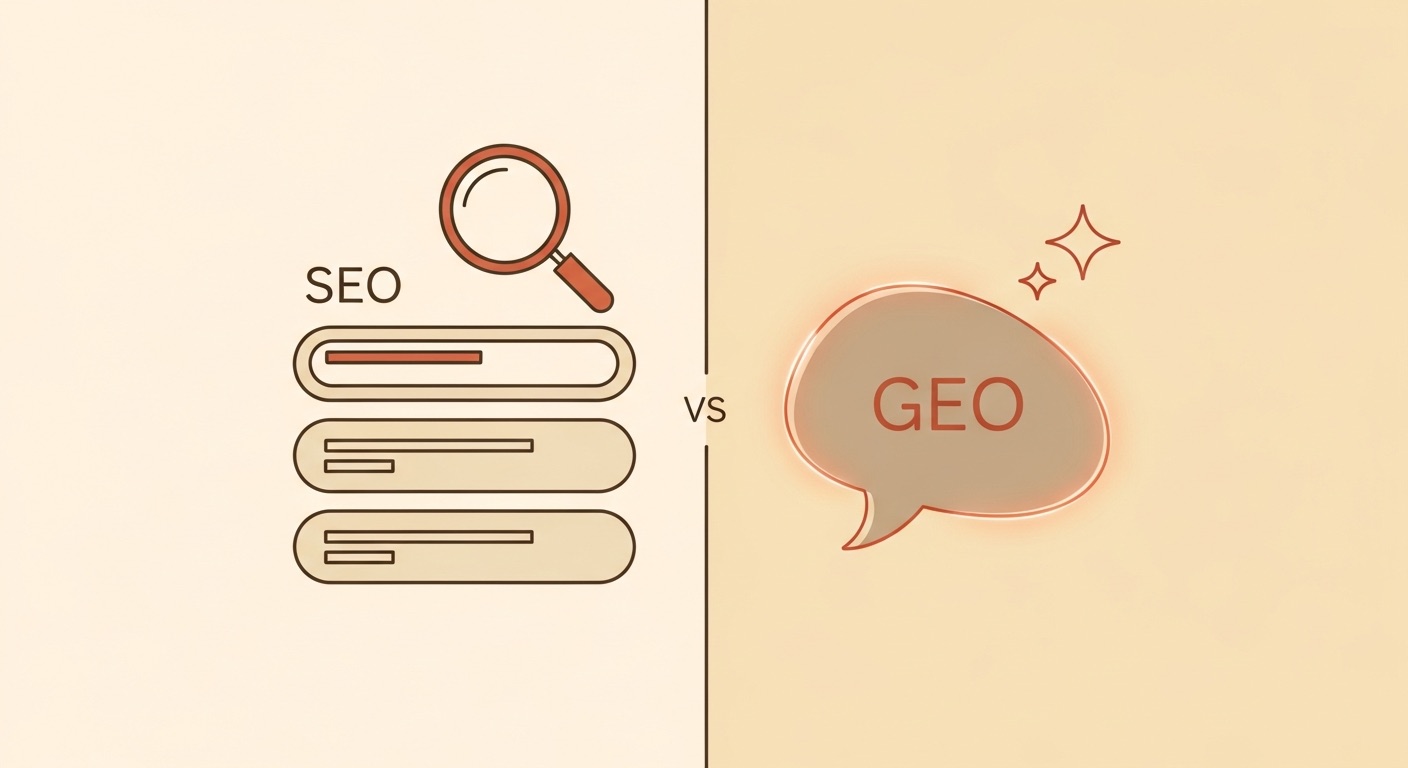
Classic SEO optimizes for ranking as high as possible in the results list of search engines. The user sees a set of links and clicks themselves. GEO optimizes for an AI system using your content as a source and naming your brand in its finished answer. The user gets the answer directly, often without clicking a link at all.
Both are connected: a clean technical and content foundation helps in both worlds. GEO does not replace SEO, it builds on it. You will find the full comparison in the article SEO vs. GEO.
How does GEO work?
AI systems generate their answers from training data and, in systems like Perplexity or Google AI Overviews, from web content retrieved live. For your brand to show up there, four things matter most:
- Strong entity: Your brand needs to be recognizable as a clearly defined unit, with consistent information across different sources.
- Clear, citable content: Fact-based, well-structured text that answers a question unambiguously gets cited more easily than vague marketing copy.
- Trust signals (E-E-A-T): Experience, expertise, authority and trustworthiness, backed by authors, sources and mentions on other sites.
- Technical cleanliness: Structured data, clean crawlability and a clear information architecture.
Can GEO success be measured?
Yes, although differently from classic rankings. Instead of tracking positions in Google, you systematically test real prompts and document whether and how your brand is mentioned in the answers. Over time, this builds a clear picture of whether your visibility in AI systems is growing.
Who is GEO worth it for?
GEO is worth it for businesses and brands whose audience increasingly searches with AI, which is to say most of them. Precisely because the field is still young, you can build a head start now. Whoever establishes a strong entity before competitors understand the topic becomes the default answer. How this is implemented in practice is described on the GEO Freelancer page.
How much work that takes depends heavily on the business model. A local business needs different signals than a shop with thousands of products or a provider with long decision cycles. I have described those differences separately: Local GEO, E-Commerce GEO and B2B GEO.
Is GEO the same as AI SEO?
Does GEO replace classic SEO?
How do I get started with GEO?
Do AI answers name you?
I check which questions ChatGPT, Perplexity and Google AI name you for today, and who they name instead.
Request GEOYou might also like

GEO Checklist: Become Visible in AI Answers in 8 Steps
A practical GEO checklist: in 8 steps, make your brand visible as a source in ChatGPT, Perplexity and Google AI Overviews. Ready to work through.
How to Get Recommended by ChatGPT: 6 Ways to More AI Visibility
How your brand gets recommended as a source in ChatGPT and Perplexity: clear facts, strong entities, trust signals and clean technology.
SEO vs. GEO: The Difference Simply Explained
SEO gets you into the search results, GEO into the AI answer. What sets SEO and GEO apart, what they share, and when you need both.